Table of Contents
It indicates you can make new, much better options and stop coming under old habits. Research reveals that familiarizing emotional patterns is a core favorable impact of treatment. Therapy can not make every one of life's challenges go away, however it can aid you begin reacting to challenging individuals or situations in much healthier, more efficient ways.
Development in therapy is constantly a positive sign. It means you're improving and relocating forward, and it reaffirms that you're being sustained where you are now, not where you were when you began. Achieving your preliminary goals and establishing brand-new ones with your therapist demonstrates true momentum in your healing journey.

Development in treatment is seldom, if ever, linear. This implies points will not always occur in a straight line or in a foreseeable method. You may have problems, regressions, or hard minutes along the means, however it is necessary to keep in mind that these become part of the process, not an indication of failing.
Are you taking into consideration therapy yet are uncertain how usually you should attend sessions? In this write-up, we will discover the concern: How typically should you participate in therapy sessions?
Navigating the Core Issues of Psychological Distress
The reason is straightforward: treatment is a practice. Just like meditation, yoga exercise, exercise, writing, or any kind of other technique, it needs consistency of immersion with a whole lot of practice to find out and internalize the method.
This will certainly equip you to choose that really feel like your selections (not just adjustments to the needs of other individuals). As you discover to identify and navigate the complexities of your interior globe with of treatment, you will certainly locate greater credibility and imagination in job and in your relationships.
We urge you to talk to one of our specialists to establish the ideal regularity for you. It is also essential to recognize that, in situations of monetary difficulty, much of our therapists can and will suit a minimal frequency of therapy. We think that it is vital to fulfill you where you are and to move at the rate you figure out, as you get started on this profound journey.
Lots of people go to treatment when a week, and some may also go two times a week if they are taking care of acute distress or have intensive treatment goals. However, as they advance, these sessions may end up being less regular. For those with much less pushing issues that just attend counseling for ongoing maintenance, bi-weekly and monthly sessions are adequate.
Processing Anxiety using Evidence-Based Therapy
There isn't just one element dictating the variety of times one need to go to treatment, however various factors that play a role in figuring out treatment frequency. These aspects can be internal (individual struggles, inspirations, and so on) and exterior (restorative aspects). By comprehending these elements, you will recognize why your therapist develops a specific timetable and why that schedule is most suited to your recovery journey.
In such cases, twice-weekly sessions might be called for. Satisfying the specialist extra often in the onset of treatment is typically recommended. It can be on an once a week or biweekly basis, and the reason for this is simple: the extra you fulfill with the specialist, the faster the therapeutic bond can be established.
Supporting Healing After Structured Support
The frequency of therapy sessions also comes down to what treatments are being utilized. Different therapy approaches have different session regularity referrals due to the fact that some can be extensive while others might not be. Psychoanalysis usually requires several sessions a week, while psychodynamic therapy (what we offer at Deepness Counseling) could require just once a week sessions.

Your budget, job schedule, personal schedule, and the distance in between your home and the clinic need to all be discussed with your specialist. This is crucial for establishing a therapy routine that keeps you committed without adding any type of unnecessary stress. No matter the psychological health problem, attending once a week therapy sessions can be valuable for all those who regularly most likely to therapy.
Moving Forward from Unattainable Goals to Healthy Achievement
When therapy sessions are arranged at an established interval, it allows you and the therapist to create a more powerful partnership, which, subsequently, creates greater trust in much less time. This produces a safe space where you can process and review your experiences, thoughts, and feelings with your specialist so that they can acquire understanding into your struggles.
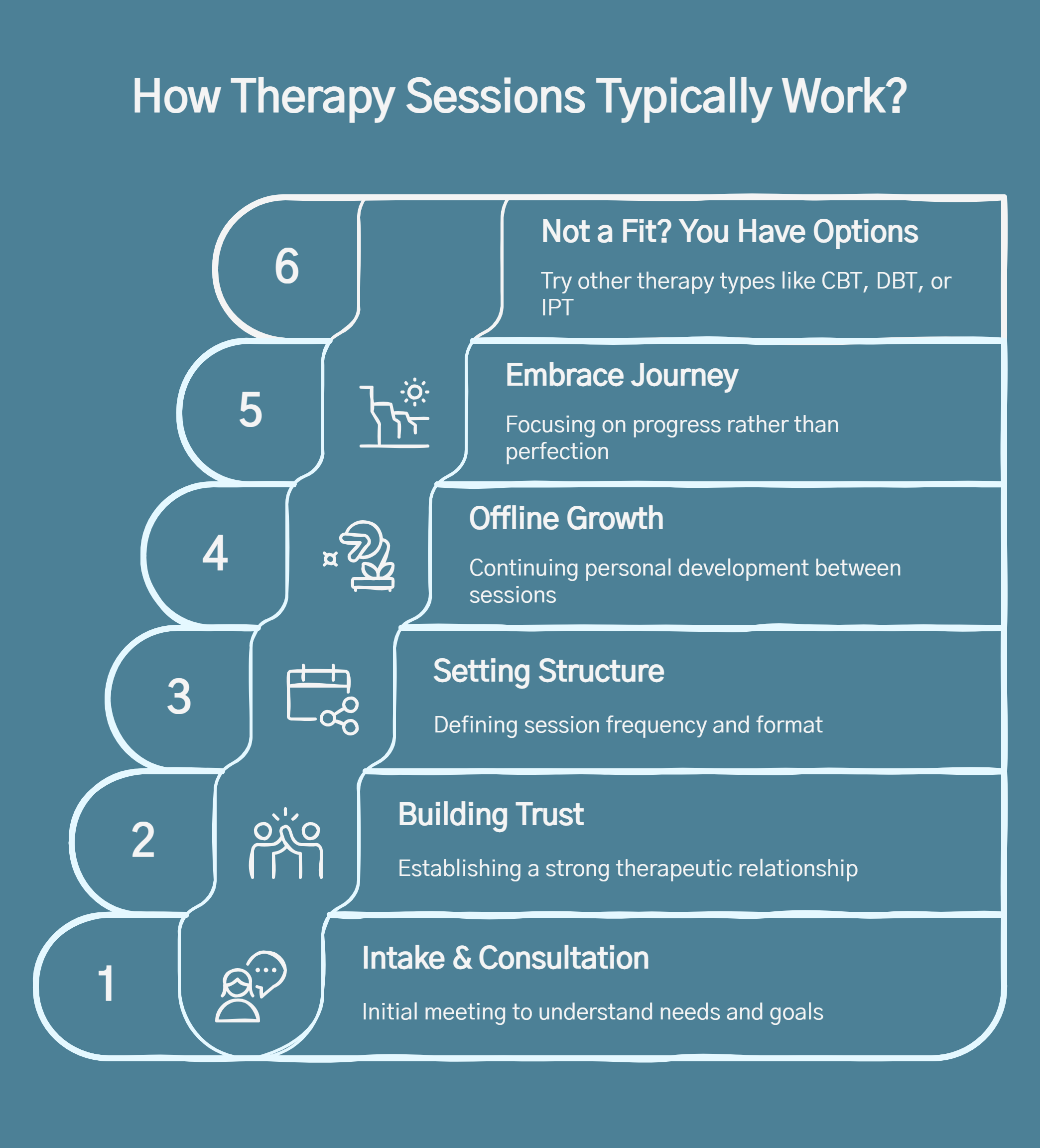
As you meet your therapist extra regularly, the possibility of issues going unaddressed, nonetheless small, is reduced. With regular regular follow-ups, the therapist can examine the progress made and strengthen coping mechanisms and brand-new knowings deemed required for producing long-term changes. A therapistclient partnership is started on depend on, and without regular conferences, it can be difficult to construct that count on.
Restoring Self-Compassion for Success-Oriented People
When you feel comprehended and unconditionally supported, you can share your thoughts, feelings, and has a hard time without appointment. For intimate discussions to move freely, it is necessary to have a conducive setting where individual expression is not suppressed by judgment. One method to create such a secure room is to meet your therapist regularly to discuss your concerns and discover resolutions while devoted to you.
It is a vital component of psychological health and wellness care that can have an extensive influence on an individual's total well-being. Establishing will be required is an ongoing process that might need changes along the method. It is necessary to pay focus to signs that show the demand to raise or decrease the.
Review your worry about your therapist and discover the possibility of even more intensive therapy. If you discover on your own experiencing boosted distress, heightened signs, or a worsening of your mental health and wellness problem, it may suggest the demand for even more constant treatment sessions. Connect these modifications to your specialist to ensure that they can change your therapy strategy appropriately.

Navigation
Latest Posts
Why Loss Affects OCD
Partnership Challenges Rooted in Ancestral Wounds
Career Challenges impacting Neurolinguistic Programming Therapy Clients in Waterloo, Ontario